

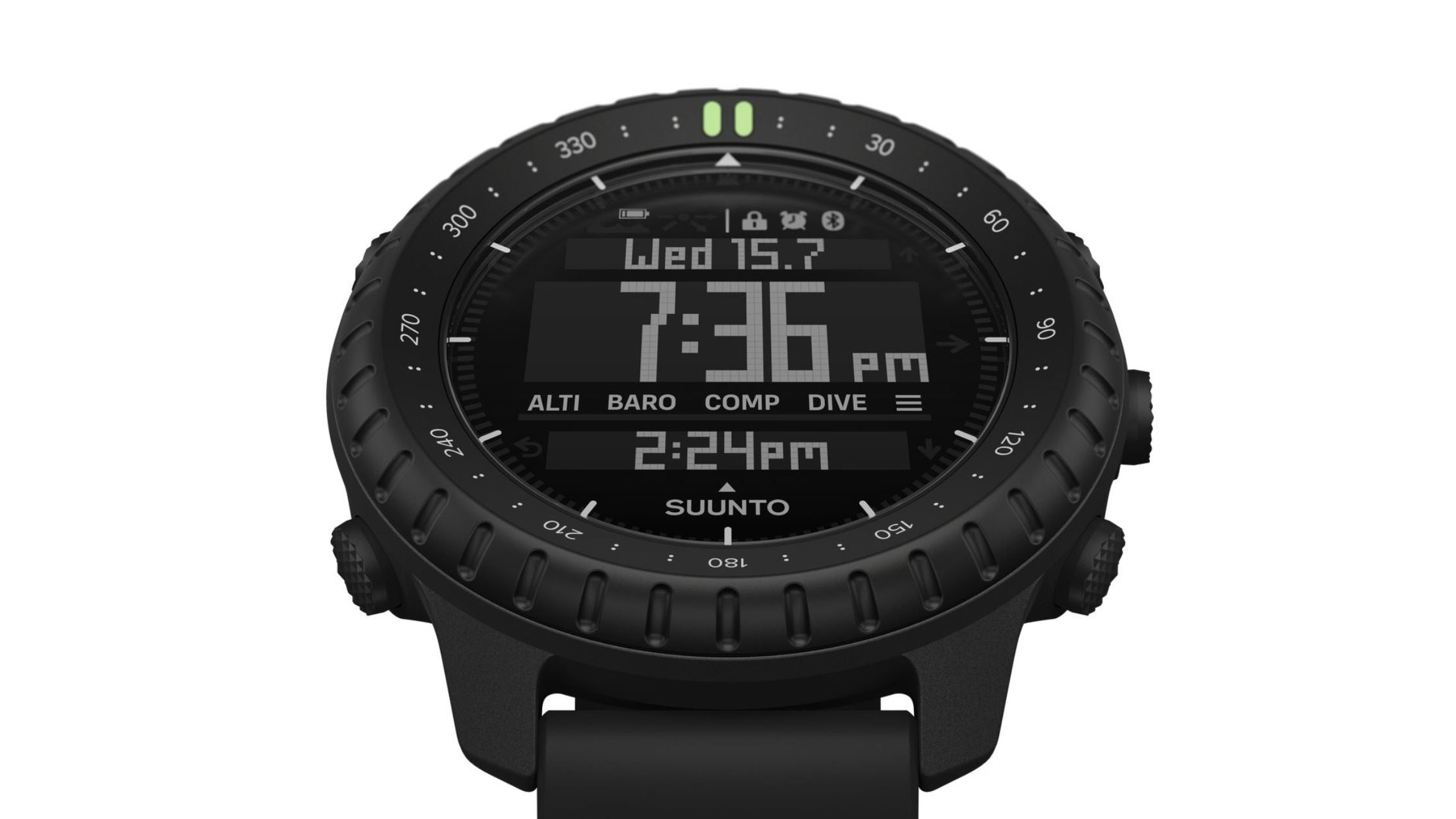
Suunto Core 2: Nearly 20 Years Later, an Outdoor Icon Gets Its Successor
There are not many pieces of technology from 2007 that still make complete sense today.
The original Suunto Core is one of them. Launched almost 20 years ago, it took the altimeter, barometer and compass functions Suunto had been developing for outdoor use and put them into a distinctive digital watch built for the mountains, trails and places where knowing what is happening around you matters. Suunto itself traces those ABC functions back to the Vector in 1998, before introducing the Core in 2007. Now there is finally a successor.
The Suunto Core 2 is brighter, tougher and more connected than the original, but Suunto has resisted the obvious temptation to turn it into another GPS smartwatch. There is still no built-in GPS, heart-rate sensor or full-colour touchscreen. Instead, the Core 2 remains focused on altitude, weather, direction and the sort of information that is useful when phone reception and charging cables are not guaranteed.

The Core Idea Hasn't Really Changed (in a good way)
The three letters that matter here are still ABC: altimeter, barometer and compass.
The altimeter helps you understand changes in elevation as you move through terrain. The barometer monitors atmospheric pressure and gives you an indication of changing weather conditions, while the compass provides direction without needing GPS or a mobile connection. The Core 2 also retains the storm alarm, with Suunto saying it has improved the accuracy to provide more dependable warnings with fewer false alarms. Sunrise and sunset information remains, while moon phase and a simple step counter are new additions. None of this is designed to compete with the enormous feature lists found on modern sports watches.
If you want maps, detailed activity tracking, heart-rate data and GPS navigation, Suunto already makes watches for that. The Core 2 is for someone who would rather have a smaller set of useful outdoor tools that can continue working independently for months at a time.

Core 2 vs Core: Familiar for a Reason
Put the Core 2 next to the original and it is immediately obvious that Suunto did not want to lose the identity of the watch.
The original measures 49.1 x 49.1 x 14.5mm. Core 2 measures 49 x 49 x 14.84mm, so there is almost no meaningful change to the overall footprint. The weight rises from 64g to 76g, but this remains a relatively light watch considering its large 49mm case.
The broad circular case, digital display and physical controls are all still there. Suunto has cleaned up the bezel and revised the strap, but this is clearly supposed to look like the next Core rather than an entirely different product. For existing owners, that familiarity should be reassuring. The Core has always looked more like a piece of outdoor equipment than a conventional watch. Making it smaller, sleeker or more touchscreen-led might have made it look newer, but it would also have removed some of the character people have been wearing since 2007.
What Has Changed?
The basic comparison is fairly straightforward:
| Suunto Core 2 | Suunto Core | |
|---|---|---|
| Case | 49 x 49 x 14.84mm | 49.1 x 49.1 x 14.5mm |
| Weight | 76g | 64g |
| Altimeter | Yes | Yes |
| Barometer | Yes | Yes |
| Compass | Yes | Yes |
| Display | LED dot-matrix | Matrix |
| Glass | Gorilla Glass | Mineral crystal |
| Backlight | Red / green | Green |
| Water resistance | 10 ATM | 3 ATM |
| Battery | CR3032 | CR2032 |
| Bluetooth | Yes | No |
| Moon phase | Yes | No |
| Step counter | Yes | No |
The overall dimensions and core ABC functionality stay familiar, while the display, glass, water resistance and connectivity receive the bigger changes.
And that is probably a better way of understanding Core 2 than simply counting new features.
It is not dramatically smaller. It does not have GPS. It does not suddenly do 100 different sports.
Instead, Suunto has improved the things an existing Core owner is actually likely to notice.

The Display Is Probably the Upgrade You'll Notice First
One of the most important changes is also one of the simplest. Core 2 retains a 1.3-inch display but now uses a higher-contrast LED dot-matrix screen that Suunto says is 40% brighter than the original. Mineral crystal has also been replaced by tougher Gorilla Glass.
You might be checking altitude halfway up a climb, looking at the pressure trend before leaving camp or using the compass while moving. The information needs to be available at a glance rather than requiring you to stop and find the perfect viewing angle. There is also a switchable red and green backlight. The original Core used a green backlight, whereas Core 2 lets you choose red illumination when you want to preserve night-adjusted vision.
Think about checking the time from inside a tent before sunrise. A bright screen can be surprisingly disruptive once your eyes have adjusted to darkness. Red illumination is a small detail, but it is the sort of detail that makes sense for the places this watch is intended to be used. The buttons have been enlarged too, making them easier to operate with gloves or wet hands. Just sensible improvements.

It Is Considerably More Comfortable Around Water
Perhaps the clearest difference between Core and Core 2 is water resistance. The original Core is rated to 3 ATM / 30 metres. Core 2 raises that to 10 ATM / 100 metres.
The Core was always designed to cope with the elements, but 10 ATM makes the new model much better suited to the realities of spending time outside: heavy rain, swimming, wading through water or simply getting soaked without having to think too carefully about the watch on your wrist. Suunto has also tested Core 2 to MIL-STD-810H durability standards.
Military-standard terminology can sound slightly dramatic, but the practical message is straightforward. Combined with Gorilla Glass and stronger water resistance, Core 2 has been designed to be used as equipment rather than something that needs protecting from the environment it was supposedly built for.

No Charging Cable Required
This might be one of the best things about the Core 2. It still uses a replaceable battery.
Core 2 moves to a CR3032 coin cell, with Suunto claiming up to 15 months of typical use. The battery remains user-replaceable, and the watch provides a warning when it starts running low. The original Core uses a CR2032 battery, with Suunto's current specification giving approximately 12 months of normal use. There is something refreshingly straightforward about that.
You do not have to remember to charge the watch the night before a walk. You do not need to add another proprietary cable to your bag before going away. You put it on, use it and eventually replace the battery many months later.

Bluetooth Arrives, but It Isn't a Smartwatch
Core 2 does introduce one significant piece of modern technology: Bluetooth. Connecting the watch to the Suunto app allows automatic time synchronisation, settings syncing and over-the-air firmware updates. Sunrise and sunset information can also be updated through the connection. What is interesting is how restrained Suunto has been with it.
Bluetooth has not been used as an excuse to fill the Core 2 with notifications or turn it into an extension of your phone. The connection can be used when needed and switched off when it isn't. That feels appropriate.
If you are travelling, automatic time adjustment is useful. Firmware updates are useful on a product that could realistically stay on someone's wrist for years. But once you head outside, the important parts of the watch continue working independently. Your compass does not need phone reception to know where north is.
Should Core Owners Upgrade?
If your original Core is still working perfectly and doing everything you need, Core 2 does not suddenly make it obsolete. That would almost miss the point of the watch.
But there are good reasons to move across. The brighter display should make a difference every time you check your wrist. The jump from 3 ATM to 10 ATM is substantial if you regularly use the watch around water. Gorilla Glass makes sense on something designed to get knocked about, while the red backlight, better buttons and improved storm alarm all make the Core easier to live with outside.
Bluetooth and the step counter add some modern convenience without changing the character of the watch. For someone buying their first Core, the choice is easier. Core 2 takes the same simple ABC formula and brings the surrounding hardware much closer to what we would expect from an outdoor watch in 2026.
My Thoughts
Nearly 20 years is a long time between generations. That makes it interesting that Suunto has resisted completely rethinking the Core.
The Core 2 is still large. It is still digital. It still has an altimeter, barometer and compass at the centre of the experience. It still works without GPS, and you can still go for more than a year without reaching for a charging cable. What has changed is how well the watch fits that purpose.
The display is brighter, the glass is tougher, water resistance is considerably better and the controls have been refined. Bluetooth adds useful convenience when you want it, but disappears into the background when you don't. The original Core has lasted because it never needed to be the cleverest watch in the room. It just needed to give you useful information when you were somewhere more interesting.
Core 2 keeps that idea intact. It simply does it better.


Laisser un commentaire
Ce site est protégé par hCaptcha, et la Politique de confidentialité et les Conditions de service de hCaptcha s’appliquent.